
Water Removal and Structural Drying for Rural Properties
Water Damage Restoration in Fallbrook, CA
Our team can help when a plumbing failure, appliance leak, roof opening, irrigation problem, or storm-related intrusion affects your property. We trace the complete moisture path, extract standing water, dry affected materials and concealed spaces, clean the work area, and complete approved repairs.
Water Extraction
Moisture Inspection
Structural Drying
Material Removal
Cleaning and Sanitizing
Property Repairs

5 Star & A+ Rating
Yelp, Google & BBB
Request Help Today
Following the Water Beyond the Visible Damage
Water may spread beneath flooring, soak into drywall and insulation, enter crawl spaces, or travel into lower areas before the full damage becomes apparent. We inspect the surrounding materials so the restoration plan addresses where the moisture traveled and what each area needs.
Water Damage Restoration Services We Provide
- Water damage inspections
- Emergency water extraction
- Moisture detection and mapping
- Structural drying and dehumidification
- Wet drywall and insulation removal
- Flooring and subfloor drying
- Cleaning and sanitizing
- Approved repairs and reconstruction
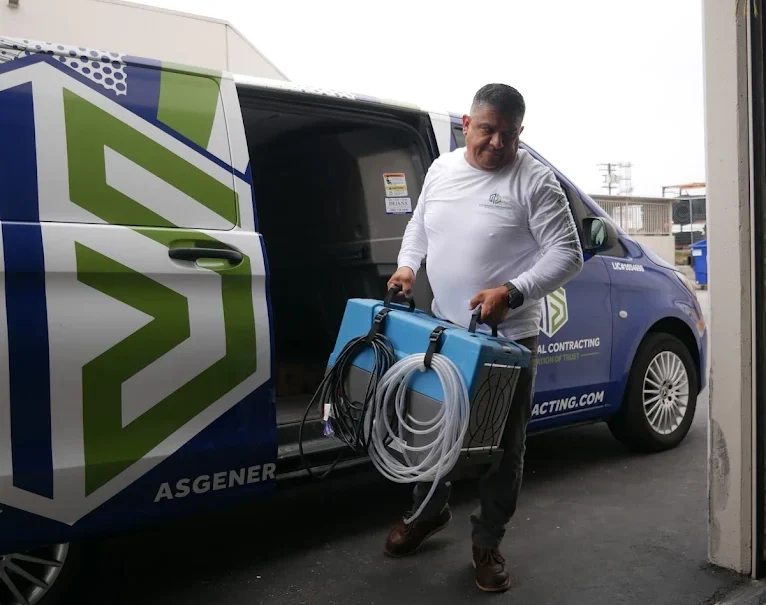
Not Sure How Far the Water Has Spread?
Moisture may travel beyond the puddle, stain, or damaged material you first notice. We inspect the visible problem and nearby areas to determine whether extraction, structural drying, material removal, or repair work may be needed.
Signs Professional Water Damage Restoration May Be Needed
Water Has Reached More Than One Room
Water moving through doorways, shared walls, or connected flooring may indicate a larger affected area than you can see.
Flooring Feels Soft, Raised, or Uneven
Warped boards, loose tiles, or soft spots may mean moisture has reached the flooring system or subfloor underneath.
Drywall or Ceilings Are Stained
Discoloration, bubbling paint, sagging drywall, or peeling finishes can point to moisture inside a wall or ceiling cavity.
A Damp or Musty Odor Remains
An odor that continues after visible water is removed may indicate wet materials or trapped moisture nearby.
Cabinets or Baseboards Are Swelling
Expanded wood, separating trim, or damaged cabinet panels may show that water has been absorbed into porous materials.
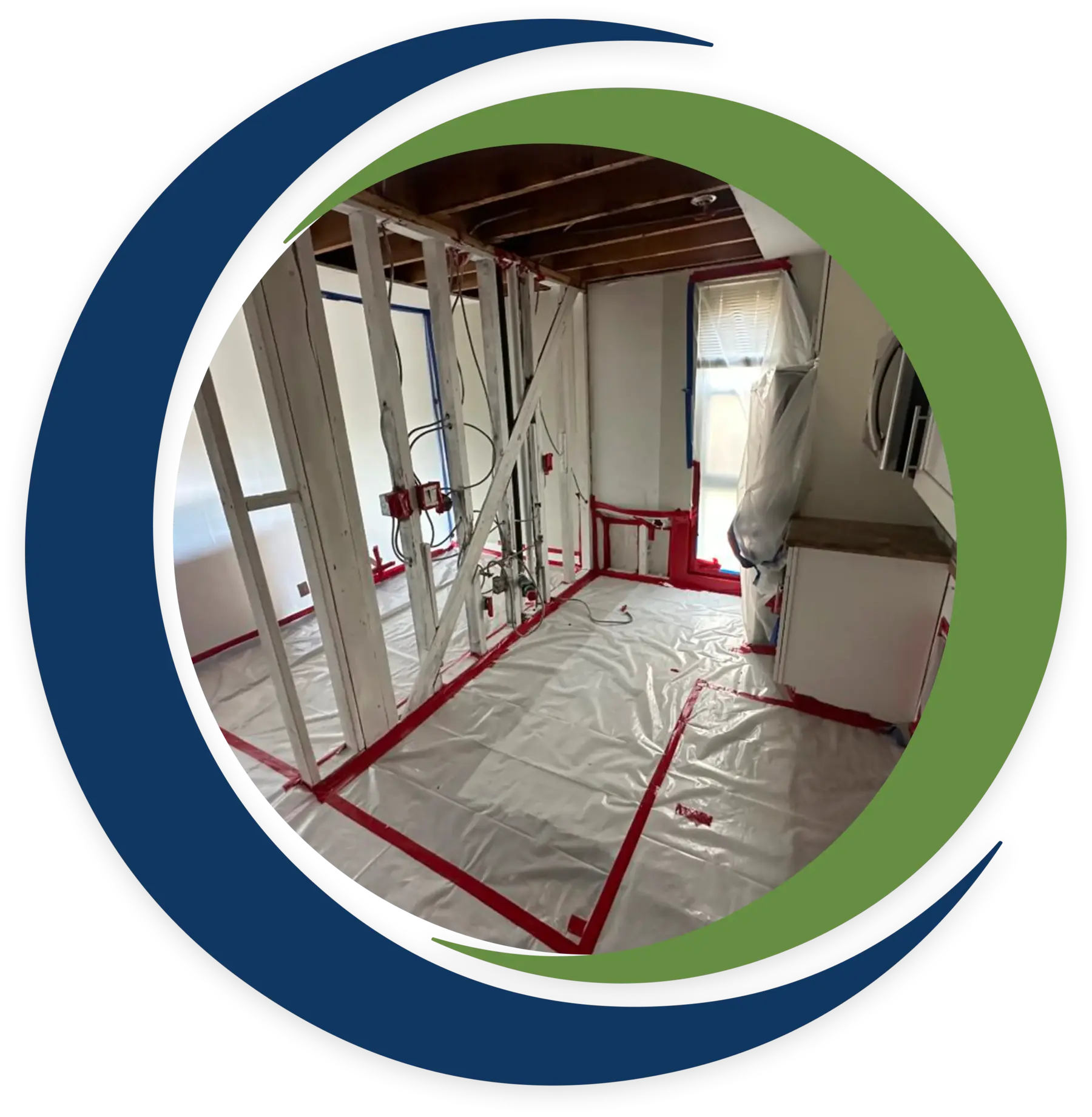
What Happens When You Call About Water Damage?
When you contact us, we help you understand what needs attention first. Our team inspects the affected areas, explains the restoration plan, completes the approved work, and checks the property before the project moves into repairs or completion.
We Learn What Happened
We ask where the water started, when you discovered it, whether the source has been stopped, and which rooms or materials appear affected.
We Inspect the Property
Our team evaluates the visible damage and checks nearby walls, ceilings, flooring, cabinets, and other areas where moisture may have traveled.
We Build the Restoration Plan
We identify what requires water extraction, drying, cleaning, removal, or repair and explain the recommended work before moving forward.
We Complete the Approved Work
Our team extracts standing water, removes materials that cannot remain, sets up drying equipment, and monitors moisture conditions.
We Review the Restored Areas
After drying is complete, we check the affected materials, explain what was accomplished, and coordinate approved repairs when necessary.
Reliable Support When Water Disrupts Your Property
Water damage can leave you unsure about what needs immediate attention, which materials can remain, and whether repairs will be necessary. We provide clear guidance from the initial inspection through drying and approved restoration work.
Why Customers Trust Our Water Damage Restoration Team
Local Help for National City Properties
We work in ranch homes, raised-foundation houses, hillside residences, rental properties, agricultural buildings, and commercial spaces.
Licensed Restoration and Repair Experience
Our licensed team understands both water mitigation and construction, allowing us to evaluate damage with the cleanup and repair stages in mind.
Clear Communication Throughout the Project
We explain our findings, review the recommended services, and keep you informed as extraction, drying, and restoration move forward.
Careful Moisture Detection
We check visible and nearby materials for moisture so the restoration plan addresses more than the water you can see.
Drying and Repairs Through One Team
When damaged materials require replacement, we can coordinate approved drywall, flooring, cabinet, and finish repairs after the property is dry.
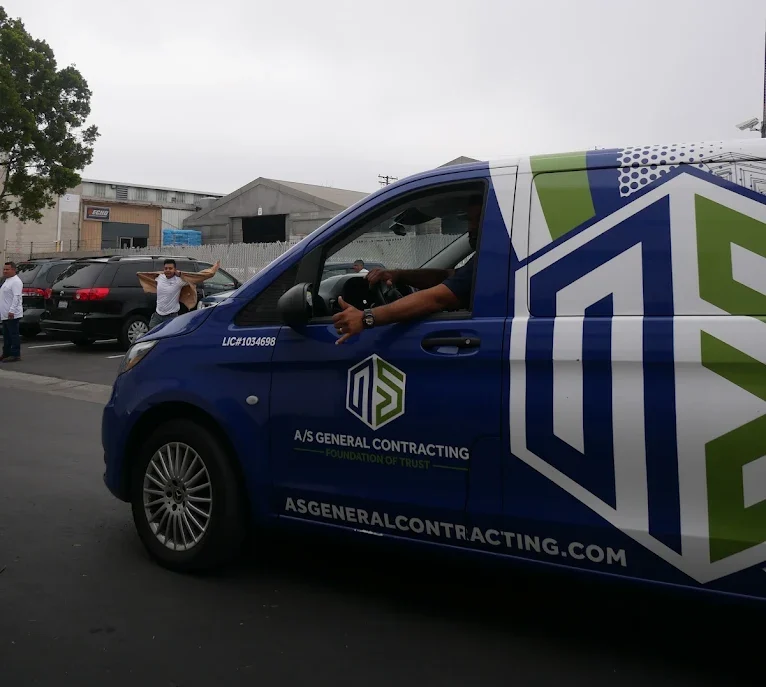
Water Damage Restoration Throughout Fallbrook
We help homeowners, landlords, property managers, agricultural property owners, and business owners respond to water damage across Fallbrook.
Communities Covered Across Fallbrook
- Downtown Fallbrook
- Winterwarm
- De Luz
- De Luz Heights
- Gird Valley
- Fallbrook Highlands
- Sycamore Ranch
- Live Oak Park area
- Morro Hills area
- South Mission Road corridor
- East Mission Road corridor
- Hilltop
- Harborside
- Properties near Reche Road
- Nearby Fallbrook communities
- 5.0 & A+ Ratings on Google, Yelp, Facebook, and BBB
What Customers Say About AS General
See what property owners have shared about their experience with our communication, restoration work, and support after water damage.
Excellent rating
Based on 50 reviews

Trustindex verifies that the original source of the review is Google.
Sam and Ali were absolutely fantastic to work with. From the very beginning, they were professional, thorough, and incredibly communicative. They came out multiple times to assess the situation and provided a detailed, transparent quote that clearly outlined the scope of work—no hidden fees, no surprises. What really stood out was their honesty and the time they took to explain everything. The level of detail they provided gave us full confidence in their knowledge and capabilities. They were easy to talk to, responsive, and clearly dedicated to helping their clients understand every step of the process. If you're looking for a company that is reliable, transparent, and truly knows their stuff choose A/S general contracting. I 10/10 recommend them. Charlene KrietzbergThe entire crew at A/S General Contracting were great! They kept me informed every step of the way. They were professional and did a great job on my restroom restoration. Magda helped me through the entire insurance process and I am so appreciative. I definitely recommend their services.
 Rebecca GomezA/S general contractor was recommended by a friend and so glad I went with them. They were able to come in and remodel our house after a flood and it far exceeded my expectations. They turned a stressful situation to easy and stress free for us. Special shoutout to Sam, for keeping things honest and straight forward. I knew what I was getting from the get go and if I had any issues he was able to correct them within the hour. Sam is detailed oriented and you can he shows that he cares about the customers by his actions.
 Chad Whitehouse
Trustindex verifies that the original source of the review is Google.
Two years after the “shoddy” work they performed we are having to completely replace the flooring. They shot pin nails into laminate flooring but that isn’t the worst part. The patchwork they used to lay a sub floor was crap. They know what they did. They all like to agree and blame the homeowner for whatever goes wrong. One tone even suggesting they because we live in a “trailer house,” the floor would never be perfect. Well now we see clearly what kind of a pieced together project they did, we now have someone who is fixing this fiasco! Don’t use them Danette O'QuinAS General Contacting is a great company. They repaired the water damage to my porch in a timely, professional manner. I highly recommend them to anyone who needs any type of repair!
 Deborah J. DavisAny leak damage will take time and patience. Ali, Greg and Abel were great. Good communication! Good follow through! Scheduling was clearly communicated. Every project takes time, but these guys took care of the little details. They also helped me get the most from my coverage. This is my 3rd time working with A/S Contracting. I would recommend them to anyone.
 Eric HughesGreat service fair prices. Sam and Danny were great communicators and got the job done efficiently!
 Maria TsagalakisProfessional, patient, first class customer service, on time execution and overall great experience working with this company. Highly recommend!
 Olivia BueWe had a major water leak that required us to file a claim through our insurance company, and our plumber referred us to A/S General. From the very beginning, Greg and Sam were incredibly helpful, guiding us through the entire process and helping expedite everything with our insurance company. Greg, Sam, and their entire team were professional, thorough, and communicative every step of the way. The construction crew consistently showed up on time, worked efficiently, and always left the work area clean at the end of each day. Thanks to their attention to detail and quality craftsmanship, our home is now in even better condition than before the water leak. We highly recommend A/S General to anyone in need of home restoration or construction services. Thank you to the entire team for taking such great care of our home!
 Mark Anthony YraolaI had such a great experience working with Ali and his team. I own two salons and over the years his team has helped and guided me into the many upgrades and changes I've done thru-out the spaces. I like to stay current and hip, whether thats rearranging furniture, window treatments, fresh paint, crown mold,etc ...His team has been there to help me manage my spaces. Hard to find good communication and customer service today, your in good hands with this company
 Anne James
Excellent rating
Based on 63 reviews
 A/S did a magnificent job from the beginning with Sam starting off helping me understand the process from the estimate to the time to complete the job and personally working with my insurance company to agree on a final settlement cost.Sam was able to take 250.00 off with Ali' the owners approval just like he said he would request it for us.:))Magdelena ,Abel,and along with Jose,Jonathan,and Joel were the men that came and completed the job in just 4 days.There work done was very professional and they were extremely helpful with me understanding the entire process.I thank my heavenly Father that Sam came to give me an estimate to fix what was needed in our home.Thank you A/S General Contractors!!!
 Clay R.December 17, 2024I highly recommend A/S General Contracting and will most definitely be requesting their services again. I had major water damage in my house and the repair and replacement done was outstanding. The pricing was reasonable and the worked with me in every aspect of the job. Sam Abraham was very attentive, helpful, handled everything quickly and professionally. Customer service was astonishing and they worked very quickly to get me my house back to 150%. I am beyond pleased work they did. Well made, durable and worth every penny. The service, product and overall experience was outstanding.
 Roshaun B.October 5, 2024I just want to start of by saying that this company went an above and beyond for us to get the scope writing and administrative negotiations with our insurance.I feel we received the most money so our insurance would take care of the flood we had at our home.
 Andy R.August 23, 2024Requested to do the job asap. Told Sam Abraham we have house guests coming in at the middle of the week. He sent a crew to see what needs to be done. By Monday, they started fixing the damage and late afternoon, the same day, the job was done. Sam Abraham didn't promise but he produced the result. Ben L
 Benjamin L.June 26, 2024Had some water damage in my shower and closet due to a burst pipe leak. A/S General Contracting came in and worked with my insurance to get my shower back to peak shape. Appreciate the professionalism and communication from Sam every step of the way. When I had a question he was easily accessible. Will definitely recommend to family and friends. Special thanks to Hugo as well for the good work.
 Eric M.June 10, 2024The team has been on time,quick, understanding & professional. I can say a lot of people are not like that now and days. Sam and Travis were amazing at what they do. Need more good people like them. From somebody from the military nothing makes me happier than someone that is on time and staying true to their word. Continue the good work you do gentlemen.
 Angel E.June 1, 2024Sam and A/S General were great to work with. Sam was very helpful in walking us through the insurance process for our water damage and was even able to get us more money then our other contractor. Sam was always available no matter how many questions I had. I would definitely recommend this company for any restoration project and Sam is by far one of the best individuals I have had to work with.
 Steve R.May 24, 2024
Where Water Can Collect in Fallbrook Properties
Fallbrook includes rural residences, ranch properties, hillside houses, raised foundations, and older buildings surrounded by mature landscaping. Plumbing leaks, roof openings, irrigation failures, runoff, and drainage problems may introduce water into materials without producing an obvious indoor puddle.
Sloped lots and raised foundations can allow moisture to collect beneath flooring, inside crawl spaces, around lower walls, or in difficult-to-access areas. We inspect beyond the visible water line to identify what requires extraction, structural drying, material removal, or approved repairs.
Areas Commonly Affected by Water Damage
- Drywall and ceiling cavities
- Flooring and subflooring
- Shared walls between units
- Cabinets and built-in storage
- Garages and ground-level rooms
- Attics and roof-adjacent materials
- Laundry and appliance areas
- Bathrooms and plumbing walls
Water Damage Resources for Fallbrook Property Owners
These guides, local utility information, and related services can help you recognize hidden water damage and determine the appropriate next step for your property.
Helpful Water Damage Guides
Local Flood and Storm Resource
Related Restoration Services
FAQs About Water Damage Restoration in Fallbrook
What should I do immediately after discovering water damage?
If it is safe, stop the water source and move people, pets, and valuable belongings away from the affected area. Avoid entering rooms with sagging ceilings or water near electrical equipment, and call us to inspect how far the moisture has spread.
Can water remain hidden after the surface looks dry?
Yes. Moisture can remain beneath flooring, behind drywall, inside cabinets, and within ceiling cavities. We use moisture-detection equipment to check materials that may still require drying.
Can sewage contamination remain after the water is gone?
Not always. The decision depends on the water source, saturation level, condition of the material, and how long it remained wet. We determine what can be dried and what should be removed.
How long does structural drying usually take?
Drying time depends on the affected materials, moisture levels, airflow, and size of the damaged area. We monitor moisture conditions and remove the equipment after the materials reach appropriate drying goals.
Can you repair the property after the drying is completed?
Yes. When approved repairs are needed, we can replace damaged drywall, flooring, insulation, cabinets, baseboards, and other interior finishes after the affected areas are dry.
Contact Our North County Team for Water Damage Restoration in Fallbrook
A/S General Contracting – San Diego Location
- Phone: 858-365-9803
- Email: info@asgeneralcontracting.com
- Hours: Open 24 hours, 7 days a week
We help Fallbrook homeowners, landlords, property managers, agricultural property owners, and businesses address water from plumbing failures, appliance leaks, roof intrusion, irrigation problems, and exterior runoff. Our team can inspect the moisture path, extract standing water, dry affected materials, clean the space, and complete approved repairs.
Water Damage Spreading Through Your Property?
Water can continue moving beneath flooring, behind walls, and through nearby materials after the source has been stopped. Call our team to inspect the affected areas, explain what needs attention, and begin the appropriate extraction, drying, and restoration work.